How Much Does Cold Calling Cost in Australia? (2026)
How Much Does Cold Calling Cost in Australia? (2026)
Updated October 2026. What B2B technology companies actually pay for cold calling in Australia, the pricing models you will be quoted, and how to compare them on the only number that matters.
"How much does cold calling cost?" sounds like it should have a one-line answer. It doesn't, because "cold calling" covers everything from a junior hire with a phone and a spreadsheet to an offshore dialler farm to a managed programme with researched lists, scripts and weekly coaching. They are priced in completely different ways, and the cheapest monthly number is rarely the cheapest result.
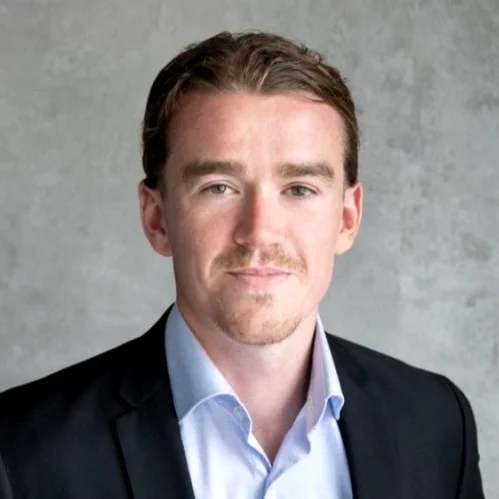
I am Jamie Partridge, founder of Uplift Sales. We run phone-only cold calling programmes for B2B tech companies from Sydney. This guide sets out the cost models used in the Australian market, what drives the price up or down, how to work out your real cost per qualified meeting, and the red flags in cheap offers.
If you want the companion pieces, read our outsourced SDR cost guide for full SDR programme pricing and our appointment setting cost guide for meeting-based pricing. This post focuses on cold calling specifically.
The short answer
| Model | How it is priced | Typical range used on this site | Watch out for |
|---|---|---|---|
| In-house caller | Salary, super, tools, management | 150,000 - 180,000 AUD / year fully loaded | Ramp, turnover and management time |
| Agency retainer | Fixed monthly fee | Varies by scope and seniority; see below | What "dedicated" means |
| Pay per meeting | Fee per qualified meeting | 400 - 900 AUD / qualified meeting | What counts as billable |
| Per hour | Rate per calling hour | Varies widely | Paying for dials, not outcomes |
| Hybrid | Smaller retainer + per-meeting fee | Varies | Contract complexity |
The in-house and per-meeting ranges are the same figures we use in our outsourced SDR cost guide, so you can compare like with like across our posts. For our own pricing, see our current cold calling pricing.
Option 1: An in-house cold caller
Most CFOs budget a caller at base salary plus super. The real cost is much higher.
Our outsourced SDR cost guide itemises the fully loaded 2026 cost of an in-house SDR in Australia at 150,000 to 180,000 AUD a year. That includes:
- Base salary of roughly 75,000 to 90,000 AUD
- Superannuation at 12% (the ATO's superannuation guarantee rate)
- Variable pay of roughly 20,000 to 30,000 AUD
- Tools: dialler, data, CRM seats and call coaching software, roughly 12,000 to 18,000 AUD
- Payroll tax and on-costs
- Management time: someone has to coach, listen to calls and run the weekly review
- Ramp: three to six months before a new caller is fully productive
- Turnover: SDR tenure is short, and each replacement means recruiting and ramping again
Teams that budget only the base salary typically underestimate the real cost by 40 to 60%.
In-house makes sense when you have a proven playbook, a sales leader with time to manage callers, and enough volume to keep a full-time caller busy. If you are not there yet, the ramp and management cost land on the founder. For a deeper comparison, see in-house SDR vs outsourced SDR.
Option 2: Outsourced cold calling pricing models
Agencies in Australia use four main structures. Each changes what the agency is incentivised to do, so the model matters as much as the price.
Monthly retainer
You pay a fixed monthly fee for a defined scope: usually a caller (dedicated or shared), list building, dialler, scripts, management and reporting.
- Pros: The agency is paid to run a good programme, not to hit a booking count. Easier to hold them to a strict definition of a qualified meeting. Predictable cost.
- Cons: You carry the risk if the programme underperforms, so you need transparency on activity and outcomes.
- Ask: Is the caller dedicated to my account or shared? What is included, and what is billed separately?
Retainers vary widely with scope and seniority. Our outsourced SDR cost guide breaks down what dedicated, shared and enterprise-tier retainers typically include.
Pay per meeting (pay per appointment)
You pay a fee for each meeting booked or held. Across the Australian B2B tech market, a fair price per qualified meeting commonly lands between 400 and 900 AUD, with simpler mid-market ICPs at the lower end and complex buyers (CISOs, enterprise CIOs, regulated industries) at the top.
- Pros: You pay for outcomes. Low risk if the ICP is tight.
- Cons: The agency is paid on volume, so the pressure is to book meetings that technically meet the criteria but go nowhere.
- Ask: What exactly counts as a billable meeting? Booked or held? Who decides whether it qualified? What happens with no-shows?
Anything far below this range is usually a shared-rep bulk model or a quality problem.
Per hour
You pay for calling time, usually a rate per caller hour. It is common with telemarketing call centres and some offshore providers.
- Pros: Simple, flexible, easy to start and stop.
- Cons: You are paying for activity, not results. Without strong management on your side, hours turn into dials with no meetings.
- Ask: Who writes the script, builds the list and coaches the caller? How are hours verified?
Hybrid
A smaller retainer plus a per-meeting fee. It aims to balance effort and outcome, but needs a tight, written definition of a qualified meeting to avoid monthly disputes.
Which model is best?
For most B2B tech companies selling a considered product, a retainer judged on cost per qualified meeting gives the best result, because the agency's incentive is quality, and you can measure the outcome yourself. Per-meeting suits tightly defined ICPs. Per-hour suits teams that already have strong sales management and just need extra calling capacity.
If you need less than a full-time caller, a part-time arrangement can make more sense than a cheaper full-time one. Our fractional SDR service is built for that.
What drives the cost of cold calling
Two quotes for "cold calling" can differ several times over. These are the reasons.
1. Your ICP and buyer seniority
Calling operations managers at mid-sized logistics companies is a different job from reaching CISOs at ASX 200 companies. Senior, technical or heavily gatekept buyers take more research, more attempts and more skilled callers per conversation, so each qualified meeting costs more.
2. List quality and direct dials
The biggest hidden cost in cold calling is bad data. A list of switchboard numbers and out-of-date contacts means most dials go nowhere. Verified direct dials and mobiles cost more to source, but they are what get decision makers on the line. Ask whether data is included in the fee or billed as credits.
3. Dialler, caller ID and local numbers
A proper dialler, CRM integration, call recording where used and local-presence numbers (a Sydney number when calling Sydney) all cost money. Under Australian rules, caller ID must also be enabled on every telemarketing call. A low quote often leaves these out, or uses cheap infrastructure that hurts connect rates.
4. Caller experience and location
Experienced callers who understand B2B tech cost more than juniors reading a script. Australian-based callers cost more than offshore ones, but they work in the same time zone as your buyers, understand the market and are easier to hold to Australian compliance rules.
5. Management, coaching and reporting
Someone has to write and refine scripts, listen to calls, coach callers and report on what the market is saying. Agencies that include this cost more than ones that just supply dialling hours. If it is not included, it lands on you.
6. Compliance
Washing lists against the Do Not Call Register, keeping a suppression list, calling in permitted hours and handling opt-outs properly all take effort. A cheap provider that skips them exposes your brand. Our guide to whether cold calling is legal in Australia covers the rules.
Work with UpliftSales
Want an outsourced SDR team booking meetings for you?
UpliftSales is an outsourced sales development agency for B2B technology companies in Australia. Cold calling and appointment setting campaigns, meetings booked into your calendar.
How to calculate cost per qualified meeting
The monthly fee tells you very little on its own. Cost per qualified meeting tells you almost everything.
Step 1: Work out total monthly cost. For an agency: the fee, plus anything billed separately (data credits, dialler, setup). For in-house: the fully loaded cost divided by 12.
Step 2: Count qualified meetings held. Not booked, not "positive conversations". Meetings your AE actually ran with someone who met your written criteria.
Step 3: Divide. Cost per qualified meeting = total monthly cost ÷ qualified meetings held.
Step 4: Take it to pipeline. Multiply backwards with your meeting-to-opportunity and win rates to get cost per closed deal, then compare it with gross margin per deal.
A worked example
Using the illustrative figures from our appointment setting cost guide:
- Cost per qualified meeting: 600 AUD
- Meeting-to-opportunity rate: 40%
- Opportunity-to-close rate: 25%
- Average deal size: 60,000 AUD at 75% gross margin
Cost per closed deal = 600 ÷ (0.40 × 0.25) = 6,000 AUD. Gross margin per deal = 45,000 AUD. That is a 7.5x return on the cost of the meetings.
Run your own numbers with our Cost per Meeting Calculator and compare in-house and outsourced options with the SDR ROI Calculator.
Two programmes compared
A cheaper programme is not always cheaper. Take two hypothetical providers:
| Provider A | Provider B | |
|---|---|---|
| Monthly cost | Lower | Higher |
| Qualified meetings held | Few | More |
| Meeting-to-opportunity | Low (loosely qualified) | Higher (tightly qualified) |
| Cost per opportunity | Often higher | Often lower |
The question to ask every provider is not "what does it cost per month?" but "what has your cost per qualified meeting held been for clients like us?"
Red flags in cheap offshore cold calling
Offshore calling can work for high-volume, simple offers. For B2B tech selling to Australian decision makers, these are the warning signs:
- Priced on dials or hours, measured on dials. If the report is "1,200 dials this week" with no conversations or meetings, you are paying for noise.
- No written definition of a qualified meeting. Ask for it before you sign. If the answer is vague, so will the meetings be.
- Unverified lists or "we use our own data". Ask where the data comes from and whether it includes direct dials.
- Calling outside Australian hours or ignoring time zones. Australian rules restrict telemarketing calling hours, measured at the prospect's location. A provider calling from another time zone needs to get this right.
- No mention of the Do Not Call Register or opt-outs. If they can't explain how they wash lists and handle "please don't call me", that risk becomes yours.
- Scripts nobody on your side has seen. Your brand is on every call. You should approve the opener and talk track.
- Rotating callers. If a different person calls your accounts every month, nothing is learned and your prospects notice.
- Pay-per-meeting with loose criteria. Cheap meetings that never turn into opportunities are expensive.
None of this means offshore is always wrong. It means the monthly fee is the wrong place to start the comparison.
What to ask before you sign
- What is included in the fee, and what is billed separately?
- Is the caller dedicated to my account, shared, or part-time?
- Where are the callers based, and what B2B tech experience do they have?
- What counts as a qualified meeting, in writing?
- What has cost per qualified meeting held been for clients like us?
- How do you handle the Do Not Call Register, calling hours and opt-outs?
- Can I hear calls and see call-level reporting?
- What are the terms and notice period?
Our guide to the best cold calling agencies covers how the main providers compare, and our cold calling scripts guide shows what good talk tracks look like.
How Uplift Sales prices cold calling
We are a phone-only cold calling agency for B2B technology companies, with Australian-based SDRs working from Sydney. Every engagement is scoped on a first call against your ICP, target list and meeting goals, and covers the caller, list building and data, dialler and caller ID, scripts, weekly reviews and reporting. First qualified meetings usually land in weeks 2-3.
For package details, see our current cold calling pricing. If you need less than a full-time caller, look at our fractional SDR service. And whoever you choose, judge them on cost per qualified meeting held.
Frequently asked questions
How much does cold calling cost in Australia?
It depends on the model. A fully loaded in-house SDR costs roughly 150,000 to 180,000 AUD a year. Outsourced programmes are sold as a retainer, a fee per qualified meeting (commonly 400 to 900 AUD for B2B tech), a per-hour rate or a hybrid. Judge every option on cost per qualified meeting held.
What is the cost of an in-house cold caller in Australia?
Roughly 150,000 to 180,000 AUD a year fully loaded, once salary, 12% super, variable pay, tools, payroll tax, management, ramp and turnover are included.
Is per-meeting or retainer pricing better for cold calling?
Retainer pricing suits most B2B tech companies because the agency is paid for quality. Per-meeting can work for a tight ICP with enforced qualification, but check exactly what counts as a billable meeting.
How do I calculate cost per qualified meeting?
Total monthly cost divided by qualified meetings held. Then multiply backwards with your conversion rates to get cost per closed deal and compare it with gross margin.
Why is offshore cold calling cheaper?
Lower labour costs. The trade-offs for Australian B2B tech are local context, time zone, data quality and compliance, which often make offshore more expensive per qualified meeting.
What drives the cost of a cold calling programme?
ICP seniority, data quality, dialler and local numbers, caller experience and location, management and coaching, and compliance.
How much does Uplift Sales charge for cold calling?
Our packages are in the pricing section of our cold calling services page, and every engagement is scoped on a first call.
Want a real number for your programme? Book a 20-minute call. We will look at your ICP and target list and tell you honestly what a phone-led programme would cost and what it should deliver.
Founder & CEO of UpliftSales. Building go-to-market systems for B2B technology companies, outbound, SEO, content, sales enablement, and recruitment.