Appointment Setting Cost in Australia 2026: What B2B Buyers Actually Pay
Appointment Setting Cost in Australia 2026: What B2B Buyers Actually Pay
Updated July 2026, the real, itemised cost of running B2B appointment setting in Australia. In-house maths, outsourced pricing models, and the cost-per-meeting benchmarks that matter.
Every founder or head of sales we meet has the same conversation with their CFO before they call us. It goes something like this. "It looks like we need more pipeline. Should we hire an appointment setter, or should we outsource? What does it actually cost?"
The answer usually surprises them, in both directions. In-house is more expensive than they thought. Outsourced pricing is more variable than they thought. And the metric most people optimise for, sticker price, is not the one that matters. Cost per qualified opportunity is.
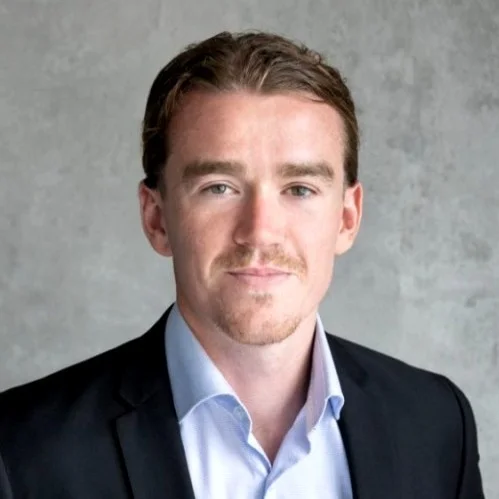
I am Jamie Partridge, founder of UpliftSales. We run outsourced SDR and appointment setting programmes exclusively for B2B tech companies in Australia. This guide breaks down every real cost line, every pricing model, and the ROI framework we use with our own clients. If you are new to the space, start with our B2B appointment setting hub, this article assumes you already understand what appointment setting is and why it works.
Let us get into the numbers.
The True Cost of In-House Appointment Setting in Australia
Most companies budget an appointment setter at base salary plus a rough guess at benefits. That approach undershoots the real number by 40 to 60%. Here is the full breakdown.
Base salary and superannuation
Base salary for an appointment setter in Australia in 2026:
- Entry-level (0-1 year experience): 55,000 to 65,000 AUD
- Mid-level (1-3 years): 65,000 to 80,000 AUD
- Senior (3+ years, complex ICP): 80,000 to 100,000 AUD
Sydney and Melbourne salaries skew 5 to 10% higher than Brisbane, Adelaide, and Perth. Remote-first companies pay closer to the Sydney rate regardless of the rep's location because the talent pool is national and remote comp benchmarks have converged.
Superannuation guarantee in 2026 is 12%. On a 75,000 AUD base, that is 9,000 AUD per year.
Running subtotal: 84,000 AUD
Variable compensation (OTE)
A quality appointment setter is on a commission structure with meaningful upside. The typical OTE mix is 70/30 base to variable, so a 75,000 AUD base carries a 32,000 AUD variable component tied to booked meetings, held meetings, and sometimes downstream metrics like opportunity conversion.
Assume the setter hits 90% of OTE, a realistic assumption for a fully ramped rep. That is roughly 29,000 AUD in variable comp.
Running subtotal: 113,000 AUD
Tools stack
A properly equipped Australian appointment setter needs the following:
| Tool | Annual Cost (AUD) |
|---|---|
| CRM seat (Salesforce, HubSpot, Pipedrive) | 1,500 - 4,500 |
| Sales engagement platform (Outreach, Salesloft, Reply) | 1,800 - 3,000 |
| Contact data provider (Cognism, ZoomInfo, Apollo) | 4,000 - 9,000 |
| LinkedIn Sales Navigator Enterprise | 1,400 - 1,800 |
| Dialler / call intelligence (Aircall, Orum, Nooks) | 2,000 - 4,000 |
| Email deliverability (Instantly, Smartlead, warm-up) | 700 - 1,500 |
| Scheduling (Calendly, Chili Piper) | 250 - 500 |
| AI research / drafting tools | 500 - 1,500 |
| Total per setter per year | 12,150 - 25,800 |
Companies that skimp on tools save 5,000 AUD and lose 30,000 AUD in dropped output. Data quality alone can double or halve booking rate.
Assume a mid-range stack: 17,000 AUD.
Running subtotal: 130,000 AUD
Management overhead
An appointment setter is not a manager-less resource. They need coaching, sequence review, weekly 1:1s, disqualification meetings with AEs, and performance management. A dedicated SDR manager costs 140,000 to 180,000 AUD fully loaded and can effectively manage 4 to 6 setters. That is roughly 25,000 to 35,000 AUD in management cost allocated per setter.
Smaller companies without a dedicated manager push this cost onto the founder or head of sales. That is a real cost even if it is not on the payroll, it is either coaching time not spent on other priorities, or a rep coached badly and burning out at month 8.
Assume the mid-range: 28,000 AUD per setter per year in allocated management cost.
Running subtotal: 158,000 AUD
Ramp cost
The average appointment setter in Australia takes 3 to 6 months to reach full productivity. During ramp:
- Month 1: 10-20% of target output: mostly training and shadowing
- Month 2: 30-50% of target output
- Month 3: 50-70% of target output
- Months 4-6: 70-100% of target output
The lost output during ramp, assuming you would otherwise be paying for and receiving full output, is worth 20,000 to 35,000 AUD depending on how you value a booked meeting.
Ramp cost recurs every time you replace the rep. The average Australian appointment setter tenure is 14 to 18 months. Over three years, you will fund ramp cost 2 to 3 times per seat.
Amortise ramp cost as ~25,000 AUD per year.
Running subtotal: 183,000 AUD
Recruitment cost
Finding a good appointment setter in Australia takes time and money. External recruiter fees are 15 to 25% of first-year salary, 12,000 to 20,000 AUD per hire. Internal recruiting time is 15 to 30 hours of hiring manager time per hire. Onboarding time is another 10 to 15 hours from the manager during the first month.
Amortised over the tenure of a typical hire, this adds roughly 10,000 AUD per year.
Running subtotal: 193,000 AUD
Fully loaded per-year total
The honest fully loaded cost of an in-house Australian appointment setter in 2026 is:
| Component | Annual (AUD) |
|---|---|
| Base salary | 75,000 |
| Superannuation | 9,000 |
| Variable comp at 90% OTE | 29,000 |
| Tools | 17,000 |
| Management overhead | 28,000 |
| Ramp cost (amortised) | 25,000 |
| Recruitment (amortised) | 10,000 |
| Fully loaded per rep per year | 193,000 |
At a lower end (junior rep, cheap stack, cheap manager time) you can bring this to 148,000 AUD. At the higher end (senior rep, enterprise stack, dedicated manager) you are at 226,000 AUD. Neither is a small number.
AUD 148,000, 226,000 per year, the honest fully-loaded cost of one in-house appointment setter in Australia in 2026. Salary + super + OTE + tools + management overhead + ramp + recruitment.
For a broader comparison of in-house SDR economics vs outsourced, see In-House SDR vs Outsourced SDR: The Full Cost & Performance Comparison.
What You Actually Get for That Money
The 193,000 AUD fully loaded figure buys you one appointment setter producing meetings. In a well-run programme, that setter should book 15 to 20 qualified meetings per month once ramped.
Assume 18 meetings per month, average across the year (accounting for ramp, PTO, and variance). That is 216 qualified meetings per year.
Fully loaded cost per qualified meeting: 193,000 / 216 = 894 AUD per meeting.
That is a real, honest number. Any comparison to outsourced pricing should be against 894 AUD per meeting, not against 75,000 AUD "salary". Every finance conversation about appointment setting should start here.
894 AUD per qualified meeting, in-house. Fully loaded cost divided by 216 meetings a year, the honest comparison number, not the 75,000 AUD "salary" line.
Outsourced Appointment Setting Pricing Models
There are four common ways outsourced providers charge for appointment setting in Australia in 2026. Each has different economics and different failure modes.
1. Per-meeting pricing
Pay a fixed fee per qualified booked meeting. Typical Australian range: 400 to 900 AUD per meeting.
When it works: tight ICP where qualification can be enforced with a strict rubric, buyer's clear on what counts as a meeting, provider willing to specialise.
When it fails: ambiguous qualification criteria, tempting the provider to optimise for volume; ICP too narrow for the provider to hit a viable meeting rate without cutting corners.
Watch out for: hidden charges (setup fees, minimum monthly commitment, tech charges). Ask for total cost over 12 months, not just per-meeting.
2. Monthly retainer
Fixed monthly fee that covers dedicated SDR time, tools, list building, campaign management, and reporting. The retainer covers effort, not outcomes.
When it works: ongoing programmes where you want a real embedded partner, need transparency, and want alignment on quality not just volume; ICPs where meeting rates take time to prove.
When it fails: provider does the work but the meetings do not land because ICP is wrong; poor accountability if there is no shared outcome metric.
Watch out for: locked-in 12-month contracts with no performance guarantees; opaque staffing (are you actually getting a dedicated rep or a fraction of one?).
3. Hybrid (retainer + per-meeting)
Smaller monthly retainer to cover baseline effort and tools, plus a per-meeting fee for qualified meetings booked and held. Aligns provider incentives on both effort and outcome.
When it works: most B2B tech engagements. Balances risk between buyer and provider. Rewards the provider for hitting targets without pushing them to lower the qualification bar.
When it fails: rare, usually only when the retainer is set too low and the provider is forced to over-index on volume.
This is the model we recommend most often and use in most of our own engagements.
4. Performance-only / commission
No fixed cost. Provider gets paid on outcomes: meetings, opportunities, or sometimes closed deals.
When it works: rarely, and usually only for high-transaction volume with low ACV.
When it fails: almost always for B2B tech. Providers optimise for volume, meeting quality collapses, and AE trust breaks down. Any provider offering pure performance pricing for a 50k+ AUD ACV product is either desperate or does not understand the maths.
Work with UpliftSales
Want an outsourced SDR team booking meetings for you?
UpliftSales is an outsourced sales development agency for B2B technology companies in Australia. Cold calling and appointment setting campaigns, meetings booked into your calendar.
The Cost Metrics That Actually Matter
Buyers get anchored on cost per meeting. That is one variable, but not the important one. The right lens is cost per qualified opportunity, and eventually cost per closed deal.
Cost per qualified meeting
Total programme cost divided by qualified booked meetings held. This is the entry-level metric.
Range for well-run B2B tech programmes in Australia:
- SaaS mid-market: 350 to 550 AUD per meeting
- Enterprise SaaS / cybersecurity: 600 to 900 AUD per meeting
- Regulated verticals (financial services, healthcare): 700 to 1,100 AUD per meeting
Cost per qualified opportunity
Meetings do not close deals. Opportunities do. Multiply cost per meeting by 1 / (meeting-to-opportunity conversion) to get cost per qualified opportunity.
Example: 600 AUD per meeting, 40% meeting-to-opp conversion. Cost per opp = 600 / 0.4 = 1,500 AUD per qualified opportunity.
Any comparison of providers should be at the opportunity level, not the meeting level. A provider charging 400 AUD per meeting with 20% opp conversion (2,000 AUD per opp) is more expensive than a provider charging 600 AUD per meeting with 45% opp conversion (1,333 AUD per opp).
Cost per closed deal
The final metric. Multiply cost per opportunity by 1 / (opp-to-close conversion) to get cost per closed deal.
Example: 1,500 AUD per opp, 25% opp-to-close = 6,000 AUD per closed deal.
Compare that to gross margin per deal. If gross margin is 45,000 AUD, cost-per-deal is 6,000 AUD, payback ratio is 7.5x. Any payback ratio above 3x on a fresh programme justifies continued investment.
Model your specific numbers in our Meeting Cost Calculator and Pipeline Velocity Calculator.
The Full ROI Framework
Here is the framework we use with new clients on the first strategy call to project return on investment.
Inputs
- Cost per qualified meeting: from provider quote or in-house fully loaded maths
- Meeting-to-opportunity conversion: from your historical data or benchmark (40 to 50% is solid for well-qualified meetings)
- Opportunity-to-close conversion: from your historical data (20 to 30% is common for B2B tech)
- Average deal size (AUD): annual contract value
- Gross margin: for SaaS this is often 70 to 80%
Calculation
- Cost per qualified opportunity = Cost per meeting / Meeting-to-opp conversion
- Cost per closed deal = Cost per opportunity / Opp-to-close conversion
- Gross margin per deal = Deal size x Gross margin %
- Payback ratio = Gross margin per deal / Cost per closed deal
- Payback period = Cost per closed deal / (Deal size / 12 months, if MRR based)
Example: mid-market SaaS
- Cost per meeting: 600 AUD
- Meeting-to-opp: 45%
- Opp-to-close: 25%
- ACV: 48,000 AUD
- Gross margin: 75%
Cost per opp = 1,333 AUD. Cost per closed deal = 5,333 AUD. Gross margin per deal = 36,000 AUD. Payback ratio = 6.75x. Payback period = 1.3 months on MRR basis.
6.75x payback on a mid-market SaaS deal at 48,000 AUD ACV. 600 AUD per meeting at 45% meeting-to-opp and 25% opp-to-close gives a 5,333 AUD cost per closed deal against 36,000 AUD gross margin.
Example: enterprise cybersecurity
- Cost per meeting: 850 AUD (multi-thread, senior title)
- Meeting-to-opp: 55% (higher because tightly qualified)
- Opp-to-close: 20%
- ACV: 180,000 AUD
- Gross margin: 78%
Cost per opp = 1,545 AUD. Cost per closed deal = 7,727 AUD. Gross margin per deal = 140,400 AUD. Payback ratio = 18.2x. Payback period = 0.5 months on MRR basis.
Enterprise programmes look scary on cost per meeting but almost always deliver stronger ROI because deal sizes dwarf the acquisition cost.
Where the Money Gets Wasted
Not every appointment setting programme delivers ROI. The failure modes we see most often, in both in-house and outsourced programmes:
Poor qualification
Meetings booked with anyone who picks up the phone. AE time wasted. Cost per opportunity balloons because meeting-to-opp conversion drops below 20%.
Wrong ICP
The setter is dialling a list that does not have the problem. No script fixes this. If your first-30-day meeting rate is under 5 per 100 accounts on a tight starter list, the ICP is wrong.
Under-investment in data
Bad contact data doubles dial volume for the same output. Provider or in-house rep burns hours on wrong numbers. Data spend is one of the highest-ROI line items in the entire stack, do not cheap out here.
No AE feedback loop
Setter books meetings, AE runs them, AE never tells the setter which ones were good. Machine calibrates blind. Fix with a weekly ritual where the AE grades the previous week's meetings against a rubric.
Cutting the programme at 45 days
Any programme worth investing in takes 60 to 90 days to compound. If you cut at 45 days you are paying for ramp with no payoff. Commit to 90 days minimum before making a call.
For a deeper look at when in-house vs outsourced is the right structural bet, see Outsourced Appointment Setting vs In-House.
Where UpliftSales Fits
We are an outsourced SDR agency for B2B tech companies in Australia. Cold calling and appointment setting during Australian business hours, no offshore call centres, founder-led. Because we work exclusively in B2B tech, we can hit ramped meeting rates faster than generalist providers and price transparently against real benchmarks.
We do not publish a monthly price because it varies by ICP, seniority, and scope. On the first strategy call we walk you through comparable engagements, scope the programme, and give you a precise number with a full breakdown of what you are paying for. Learn how the appointment setting programme is structured or read case studies for Versa Networks, Clarizen, and TotalMobile to see the numbers on real Australian B2B tech engagements.
Frequently asked questions
How much does a B2B appointment setter cost in Australia in 2026?
The fully loaded annual cost of an in-house B2B appointment setter in Australia sits between 148,000 and 226,000 AUD. That figure includes base salary of 70,000 to 90,000 AUD, superannuation at 12%, on-target variable compensation of 20,000 to 35,000 AUD, tools stack of 12,000 to 20,000 AUD per year, management overhead, ramp cost (3 to 6 months at reduced output), and recruitment cost. Companies that only look at base salary systematically underestimate the real cost by 40 to 60%. Outsourced pricing typically works out cheaper on a cost-per-qualified-meeting basis for companies below 20 million AUD ARR because outsourced providers absorb ramp, tools, and turnover cost across multiple clients.
What is the average cost per booked meeting for B2B tech in Australia?
For B2B tech in Australia, a fair cost per qualified booked meeting sits between 400 and 900 AUD in 2026. Simpler ICPs (SaaS mid-market, sales titles, mainstream verticals) come in at the lower end. Complex ICPs (cybersecurity CISOs, enterprise CIOs, regulated verticals like financial services and healthcare) come in higher because each meeting requires more research, multi-threading, and longer cadences. The single most important comparison metric is not cost per meeting but cost per qualified opportunity, a meeting means nothing if it never becomes pipeline. Use meeting-to-opportunity conversion rate multiplied by cost per meeting to get the honest number.
What are the main outsourced appointment setting pricing models?
There are four main models. Per-meeting: pay a fixed fee per qualified booked meeting, usually 400 to 900 AUD. Monthly retainer: a fixed monthly fee that covers dedicated SDR time, tools, list building, and management. Hybrid: smaller retainer plus a per-meeting fee, aligning incentive on both effort and outcome. Performance-only: no fixed cost, provider gets paid on outcomes, this sounds attractive but nearly always leads to lower-quality meetings because providers optimise for volume over qualification. For most B2B tech buyers we recommend hybrid or retainer. Per-meeting works well for very defined ICPs where the qualification bar can be tightly enforced. Performance-only rarely works for anything except low-value transactional deals.
Why is outsourced appointment setting usually cheaper than in-house in Australia?
Three reasons. First, outsourced providers spread ramp cost across multiple clients, you inherit a producing SDR from week one instead of paying for a 3 to 6 month ramp. Second, providers absorb tooling cost by using enterprise-tier tools across their client base, so the per-client cost is a fraction of what you would pay standalone. Third, providers absorb turnover cost, if a rep leaves after 14 months, the replacement is on the provider's payroll, not yours. Add in management overhead, superannuation, and recruitment cost and the fully loaded in-house per-meeting cost is often 40 to 60% higher than a well-run outsourced provider for the same output quality.
How do I calculate the ROI of an appointment setting programme?
Start with four inputs: cost per qualified meeting, meeting-to-opportunity conversion, opportunity-to-close conversion, and average deal size. Multiply them backwards to get cost per closed deal, then compare to gross margin per deal to get payback. Example: cost per meeting 600 AUD, meeting-to-opportunity 40%, opportunity-to-close 25%, average deal size 60,000 AUD. Cost per closed deal is 600 / (0.4 x 0.25) = 6,000 AUD. Gross margin per deal at 75% is 45,000 AUD. Payback ratio is 7.5x. Anything above 3x on a fresh programme is worth continuing. Below 3x, diagnose whether the problem is ICP, offer, or provider before increasing spend. Use our SDR ROI Calculator to model your specific inputs.
Does UpliftSales quote a monthly price?
No. We price on scope on the first strategy call because monthly retainer price depends on ICP complexity, seniority of the target buyer, channel mix, geographic coverage, and volume. There is no honest way to quote a monthly retainer without understanding the specifics. On the first call we will scope the programme with you, walk through comparable engagements, and give you a precise number with a breakdown of what you are paying for. If a provider quotes you a flat monthly number on a website with no discovery, they are optimising for lead capture, not your programme.
Get a free quote
The right cost benchmark is not the sticker on a website. It is the cost per qualified opportunity for your specific ICP, deal size, and offer. That is a five-minute conversation on our end and typically saves buyers a lot of wrong-way spend before they start.
If you want us to walk you through the maths on your specific programme, ICP, deal size, current pipeline, target, Get a free quote. Bring your numbers. We will bring ours.
Founder & CEO of UpliftSales. Building go-to-market systems for B2B technology companies, outbound, SEO, content, sales enablement, and recruitment.