B2B Appointment Setting: The Complete 2026 Guide
B2B Appointment Setting: The Complete 2026 Guide
Updated July 2026, the definitive guide to B2B appointment setting for Australian technology companies. Written for founders, heads of sales, and marketing leaders who need real pipeline, not a slideware strategy.
Most Australian B2B tech companies do not have a pipeline problem. They have a booked-meeting problem. Marketing generates content, events, and MQLs. Sales gets a list of leads and a spreadsheet of "target accounts". And somewhere in the middle, a founder or head of sales asks the only question that matters: how many qualified conversations did we actually have with buyers this month?
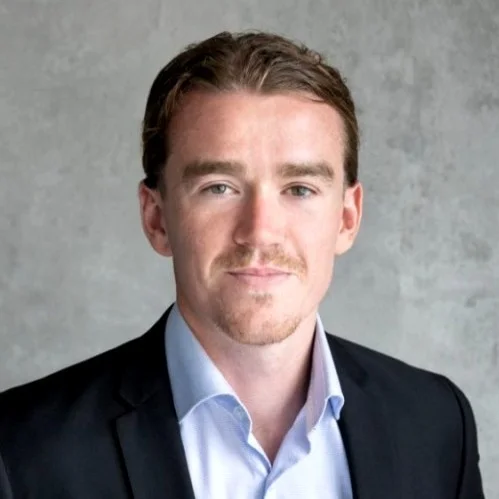
I am Jamie Partridge, founder of UpliftSales. We run outsourced SDR programmes for B2B technology companies across Australia, cold calling and appointment setting during Australian business hours, no offshore call centres, B2B tech only. Over the past decade my teams and I have booked tens of thousands of meetings for SaaS, cybersecurity, DevOps, data, and enterprise software vendors. The pattern is always the same: the companies that win are the ones who treat appointment setting as a system, not a hope.
This guide is the operating system. It covers what B2B appointment setting is, why it works for Australian tech companies, the channel mix that actually moves numbers in 2026, how to define an ICP that a setter can act on, what benchmarks look like at each stage of the funnel, what it costs, and how to choose a provider, or when to build in-house instead. Each section links to a deeper spoke where you can go one level further.
Let us get into it.
What Is B2B Appointment Setting?
B2B appointment setting is the outbound process of turning a cold or warm list of target buyers into scheduled, qualified sales meetings on your account executives' calendars. It sits between top-of-funnel prospecting and the AE-owned sales cycle.
The scope is narrower than "sales development" as a whole. An appointment setter is measured on one primary outcome: qualified meetings booked and held. They do not run discovery. They do not close deals. They do not build long-term account plans. They generate the conversations that fill the pipeline that AEs work.
Where appointment setting sits in the funnel
- Marketing generates awareness and content demand
- Appointment setting turns cold and warm accounts into booked meetings
- Account executives run discovery, demos, proposal, and close
- Customer success owns retention and expansion after the deal
For a full breakdown of the differences between an appointment setter and a full-cycle SDR, and when you need one versus the other, see Appointment Setter vs SDR.
What a meeting actually needs to include
The word "meeting" is loaded with ambiguity, which is why cheap appointment setting agencies get away with counting garbage as pipeline. A meeting that deserves to be counted has four properties:
- The prospect matches your ICP by industry, size, geography, and tech stack signals
- The attendee holds budget authority or acknowledged influence in the buying process
- The prospect has explicitly acknowledged interest in the problem your product solves
- The meeting is on the AE's calendar with a confirmed date, time, and time zone
Anything short of that is a discovery lead, a request for information, or (worse) a scheduled no-show. A tight definition is the single most important guardrail on any appointment setting programme, in-house or outsourced.
Why B2B Tech Uses Appointment Setting (and Why It Works in Australia)
B2B technology has always been an outbound-friendly category, and Australia specifically has structural properties that make appointment setting exceptionally effective in 2026.
The Australian market is small, dense, and phone-friendly
Australia's total addressable market for most B2B tech categories is a few hundred to a few thousand buyer accounts, not tens of thousands. That density has two consequences. First, targeting is achievable, a decent SDR can maintain a working knowledge of every account in the ICP. Second, buyer behaviour is more receptive to phone conversations than in the US, where SDR fatigue has driven connect rates down. Our Australian dialling data across dozens of B2B tech programmes shows connect rates 15 to 30% higher than comparable US programmes on the same tech stack.
AE time is the scarcest resource in the company
A typical Australian B2B tech AE earning 180k to 250k AUD OTE can only run 12 to 18 discovery meetings per week. If those slots are filled with junk, revenue drops. Appointment setting exists to protect AE calendars, to make sure that the meetings that land are worth the AE's time. That is why every metric in a well-run programme ties back to quality, not just quantity.
The competitive gap is widening
More Australian tech companies are investing in inbound content, but the meetings that consistently create the biggest deals still come from proactive outbound. Buyer research from Salesforce's State of Sales and Gartner keeps confirming that senior B2B buyers only trust a small handful of vendors in each category, and the ones they trust are usually the ones who reached out first, with relevance. Appointment setting is the mechanism that starts those relationships.
If you want to see how this compounds into pipeline, our Pipeline Velocity Calculator shows the impact of adding qualified meetings on your annual revenue run rate.
Where UpliftSales fits
We run appointment setting programmes for Australian B2B tech companies as an outsourced extension of your sales team. Founder-led, B2B tech only, no offshore call centres, campaigns run during Australian business hours. If you want to see how the programme is structured, from ICP definition to weekly reporting, see our appointment setting service page.
The Channel Mix That Actually Works in 2026
Every year some LinkedIn influencer declares cold calling dead. Every year our booked meeting data disagrees. The truth in 2026 is that no single channel outperforms a well-orchestrated multi-channel cadence, and the channels each play a specific role.
Phone: still the highest-converting channel
Phone is the highest-leverage channel for booking B2B meetings in Australia. It is under-used, which is exactly why it works. A conversation compresses what would take 4 to 6 email touches into a single 90-second exchange. It also filters interest hard, you either book the meeting or you do not, and the objection you hear is real market signal. Research from Cognism and Gong on cold-call connect rates and opener performance keeps showing that phone remains the fastest way to convert a cold list into a booked conversation when the data is clean and the opener is credible.
Realistic 2026 benchmarks for Australian B2B tech dialling:
| Metric | Weak | Solid | Strong |
|---|---|---|---|
| Dials per day per SDR | <40 | 50-70 | 70-100 |
| Connect rate (dials to conversations) | <5% | 6-9% | 10-15% |
| Conversation to meeting rate | <10% | 15-22% | 25-35% |
| Dial to meeting rate | <0.5% | 0.8-1.5% | 2-3% |
The Outbound Activity Calculator will model these numbers against your specific ICP and deal size.
1-3% dial-to-meeting is the line between a working programme and a broken one. Strong Australian B2B tech dialling converts 2-3% of dials to booked meetings. Weak programmes sit under 0.5%.
Email: volume, air cover, and multi-threading
Cold email is not dead either, it has just gotten harder. Google and Microsoft's 2024 sender requirements changed the game. In 2026, a compliant email programme requires proper DMARC, SPF, DKIM, sub-500 daily volume per sender, dedicated sending domains, and warmed inboxes. Companies that treat email as a spam volume game are seeing sub-1% reply rates. Companies that treat it as a targeted, deliverability-first channel are still hitting 3 to 8% reply rates on tight ICPs.
Email's real value in an appointment setting programme is three things: opening doors that phone alone cannot, multi-threading across a buying committee, and creating pattern recognition (the buyer sees your name three times before they take the call).
LinkedIn: the credibility layer
LinkedIn does not directly book many meetings for us, but removing it from the cadence causes booked meeting rates to drop 15 to 25%. It is the credibility layer. A prospect who sees a connection request, a comment on their post, and a thoughtful DM before your SDR calls them treats the call as warmer, not colder.
The best-performing 2026 cadences run 14 to 21 days, mixing 6 to 10 phone attempts, 3 to 4 email touches, and 2 to 3 LinkedIn interactions. For frameworks and real scripts to use across those touches, see our B2B Appointment Setting Scripts spoke.
Direct mail and video: high-effort, high-signal
For enterprise accounts (250k+ AUD deal size) we occasionally layer direct mail or personalised Loom video into the cadence. Both are expensive to run, but conversion rates on 30 to 50-account "top tier" lists can hit 20 to 40% meeting rates when done well. Reserve these for accounts where the deal size justifies the investment.
Defining an ICP Your Setters Can Actually Work
Most ICPs we inherit from new clients are useless for outbound. They read like a marketing persona document, psychographics, aspirations, watering holes. An outbound-ready ICP is different: it is a filter that a human on a Tuesday morning can use to decide whether to dial a specific person at a specific company.
The four dimensions of an outbound-ready ICP
- Firmographics. Industry (as specific as possible), employee count band, revenue band, geography (state and city if it matters), and headquarters location.
- Technographics. What tech stack signals suggest they are a fit? For a data infrastructure vendor: are they on Snowflake, Databricks, or Redshift? For a security vendor: what SIEM are they using? Tools like BuiltWith, HG Insights, and Cognism surface this.
- Buyer titles. Named roles, not "decision-makers". For B2B tech, common titles are CTO, VP Engineering, Head of Data, Head of Security, CIO, CFO, VP Sales, Head of Revenue Operations. Each has a different message.
- Trigger events. New in role (0-6 months), recent funding, product launch, new HQ, competitor hire, executive change. Trigger-based sequences convert 3 to 4x higher than untriggered ones.
The 100-account rule
Before running a full campaign, we always test the ICP on a starter list of 100 accounts. If we cannot book 3 to 5 qualified meetings from a 100-account tight list in the first 30 days, the ICP is wrong, not the sequence. Fix the ICP before scaling.
Multi-persona vs single-persona
Enterprise deals nearly always require multi-persona outreach. A cybersecurity deal at a bank might involve the CISO (economic buyer), Head of Security Operations (technical champion), Head of IT (co-champion), and CFO (approval). Booking a meeting with only one of them makes the meeting less valuable. Our top-performing programmes multi-thread from day one.
If you have not built a formal ICP yet, our ICP Builder tool walks through the exercise in a single sitting.
Benchmarks: What Good Looks Like in 2026
There is no substitute for real benchmarks. Aspirational numbers are worse than useless, they make weak programmes look acceptable and strong programmes look ordinary. Below are the numbers our team has validated across dozens of Australian B2B tech programmes over the last 18 months, cross-checked against publicly available data from Bridge Group's SDR Metrics Report and industry benchmarks. For an expanded set of stage-by-stage benchmarks, see our Appointment Setting Benchmarks 2026 spoke.
Per-SDR monthly benchmarks
| Metric | Weak | Solid | Strong |
|---|---|---|---|
| Qualified meetings booked per month | <8 | 12-16 | 18-25 |
| Meetings held (show rate) | <60% | 70-80% | 85%+ |
| Meeting-to-opportunity conversion | <30% | 40-50% | 55-70% |
| Opportunity-to-close conversion | <15% | 20-25% | 30%+ |
Programme-level benchmarks
- Time to first meeting, from kickoff to first booked meeting: 7 to 21 days for a well-defined ICP
- Cost per qualified meeting, 350 to 900 AUD depending on ICP complexity
- Cost per qualified opportunity, 800 to 2,500 AUD depending on qualification tightness
- Programme ROI at 12 months, 4x to 12x for tight B2B tech programmes with an average deal size above 40k AUD
For working the maths on your specific numbers, use the SDR ROI Calculator or the Meeting Cost Calculator.
12-16 qualified meetings/month per SDR is a solid B2B tech benchmark. Above 18 is strong; under 8 is broken. Held rate and meeting-to-opportunity conversion matter more than raw booking volume.
Vertical differences to be aware of
- SaaS mid-market: highest booking velocity, lowest cost per meeting
- Cybersecurity: slower booking velocity but higher meeting value; multi-threading essential
- Enterprise software (250k+ AUD ACV): 5 to 10 meetings per SDR per month, but each is worth 20x a mid-market meeting
- Regulated verticals (healthcare, government, financial services): slower, more relationship-driven; expect 20 to 30% longer sales cycles
We wrote a deep-dive on booking meetings in one of the toughest verticals, see Cybersecurity SDR Strategies.
Work with UpliftSales
Want an outsourced SDR team booking meetings for you?
UpliftSales is an outsourced sales development agency for B2B technology companies in Australia. Cold calling and appointment setting campaigns, meetings booked into your calendar.
The Cost of B2B Appointment Setting
Cost is the second-most-common question we get. The first is "will it work?", which is the wrong question, because a well-run programme in the right ICP almost always works.
We wrote a full breakdown at Appointment Setting Cost in Australia, but the short version is below.
In-house fully loaded cost
An Australian appointment setter's true annual cost:
| Line Item | Annual (AUD) |
|---|---|
| Base salary | 70,000 - 90,000 |
| Superannuation (12%) | 8,400 - 10,800 |
| OTE (variable) | 20,000 - 35,000 |
| Tools stack (CRM, dialler, data, LinkedIn) | 12,000 - 20,000 |
| Management overhead (portion of manager time) | 15,000 - 25,000 |
| Ramp cost (3-6 months at reduced output) | 15,000 - 30,000 |
| Recruitment cost | 8,000 - 15,000 |
| Fully loaded per rep per year | 148,400 - 225,800 |
The typical Australian appointment setter also churns every 14 to 18 months, meaning the ramp cost recurs.
AUD 148,400, 225,800 per year, the fully-loaded cost of one in-house appointment setter in Australia. Base salary + super + OTE + tools + management overhead + ramp + recruitment. Setter churn every 14-18 months means the ramp cost recurs.
Outsourced pricing models
- Per-meeting: 400 to 900 AUD per qualified booked meeting
- Monthly retainer, a fixed monthly fee covering SDR time, tools, list building, and management
- Hybrid, smaller retainer plus a per-meeting fee, aligning incentives
- Performance / commission, rare, and usually a red flag; providers who only get paid on meetings tend to lower the qualification bar
We price on scope on the first strategy call because it varies significantly by ICP, seniority, and channel mix. There is no honest way to quote a monthly retainer without understanding the market first.
Common Pitfalls (and How to Avoid Them)
Ten years of running these programmes across dozens of B2B tech companies has taught us the same failure patterns keep recurring. Here are the big ones.
1. Judging the programme in the first 30 days
Ramp is real. First 30 days is ICP alignment, list building, and messaging iteration. Companies that pull the plug at 30 to 45 days rarely give the machine a chance to compound. Give it 90 days minimum before making a strategic call.
2. Vague qualification criteria
If your definition of "qualified meeting" is not written down and enforced, your setters will drift toward booking anything that looks like a meeting. AE trust erodes. Pipeline gets soft. Diagnose this by pulling the last 20 meetings and grading them against a strict rubric.
3. Weak ICP definition
The number one cause of failing outbound programmes is not weak SDRs. It is weak ICP. If your setters are dialling accounts that do not have the problem, no script will save them.
4. No feedback loop from AE to SDR
The best programmes have a weekly ritual where the AE grades the previous week's meetings, and the SDR adjusts targeting and messaging based on that feedback. Without it, the machine calibrates blind.
5. Cutting the phone
Under pressure to "not annoy anyone", some teams pull phone out of the cadence entirely. Booked meeting rates drop 40 to 60%. Email and LinkedIn alone are not enough for most B2B tech ICPs in Australia. See Cold Calling Tips 2026 for what modern phone execution looks like.
6. Under-investing in data
Bad data is the silent killer. If 30% of your list has wrong phone numbers, no reasonable dialling volume will save you. Invest in verified data (Cognism, ZoomInfo, or Apollo with enrichment). The premium is trivial compared to the cost of a setter dialling dead numbers all day.
How to Choose a Provider
If you have decided to outsource, provider selection is the most important decision you will make. The delta between the best and worst providers in Australia is enormous, probably 5x on cost per qualified opportunity. We ranked the shortlist in our Best Appointment Setting Companies in Australia guide.
The six questions to ask
- What is your ICP specialisation? A provider that "does everyone" does no one particularly well. Look for B2B tech specialists.
- Show me a real sequence you ran for a client in a similar ICP. If they refuse or produce something generic, walk away.
- Are the setters dedicated to my account? Dedicated setters outperform shared ones by a significant margin. Shared-pool models can work at low retainers, but you get shared-pool results.
- What reporting will I get? Weekly activity dashboards, meeting recordings, sequence performance, disqualification reasons. Anything less than that is a black box.
- What is your average setter tenure? Below 12 months is a red flag, ramp cost gets absorbed by you.
- What happens if we miss the target in month one? A quality provider will answer with specifics: retro, adjustments, escalation. A weak one will make excuses.
Red flags
- Guaranteed meeting quotas with no ICP filtering. Meeting quotas without qualification are meaningless.
- Off-shore call centres selling themselves as "Australian appointment setting". If it matters that campaigns run in Australian business hours from Australian numbers, ask directly.
- Refusal to share sequences before contract signing.
- No case studies or references in your vertical.
- Aggressive discount if you sign on the call.
You can see how we structure programmes for real Australian B2B tech companies in our case studies for Versa Networks, Clarizen, and TotalMobile.
When In-House Makes Sense
Outsourcing is not always the right answer. The scenarios where in-house wins:
- You have 3+ SDRs already, a dedicated SDR manager, and a documented playbook
- Your deal size is 500k+ AUD ACV and requires deep product knowledge for prospecting to work
- You have a very specific regulated vertical (defence, classified government work) where the setter must be onshore in a specific security clearance context
- You have management time and hiring bandwidth, and the CFO signs off on the fully loaded cost
For everyone else, mid-market B2B tech founders under 20 million AUD ARR who need pipeline in the next 90 days, outsourcing is almost always faster and cheaper. Read our full comparison at Outsourced Appointment Setting vs In-House.
The hybrid model
The programme that outperforms both pure extremes is a hybrid: outsourced volume outbound for tier 2 and tier 3 accounts, in-house senior SDRs handling top-tier enterprise accounts. It gives you the cost efficiency of outsourcing on the majority of the pipeline and the deep product knowledge of in-house on the biggest deals.
Building the Programme: Week by Week
If you are starting from zero, here is how a well-run appointment setting programme comes together in the first 90 days.
Weeks 1-2: ICP, messaging, and list
- Formal ICP definition with firmographics, technographics, titles, and triggers
- Kickoff on messaging: pain points, value proposition, proof points, common objections
- Build a starter list of 500 to 1,000 accounts
- Assemble the tech stack (CRM, dialler, sequencer, LinkedIn Nav, contact data provider)
- Warm the sending domain
Weeks 3-4: First sequences live
- Launch sequence 1 to a subset of the list
- Daily activity: 60-80 dials, 25-40 emails per SDR
- Track: connect rate, conversation rate, meeting rate, disqualification reasons
- First AE feedback loop
Weeks 5-8: Iteration and scale
- Refine sequences based on live data
- Expand the list to 2,000-3,000 accounts
- Introduce second and third sequences for different personas
- Weekly review with sales leadership
Weeks 9-12: Machine mode
- Predictable weekly meeting volume
- Clear cost per qualified meeting and cost per opportunity
- Feedback loop tight; SDRs iterating on their own
- Decision on whether to expand headcount or hold
If you want a capacity model to plan headcount, use the SDR Capacity Planner. For a look at how this 90-day build compounds on a real Australian B2B tech engagement, see the Comtrac case study.
Frequently asked questions
What is B2B appointment setting and how does it differ from lead generation?
B2B appointment setting is the outbound process of booking qualified sales meetings between a prospect and one of your account executives. It sits between top-of-funnel lead generation (which generates any interest at all) and the actual sales conversation (which is run by an AE or founder). Lead generation is about volume, capturing anyone who might one day buy. Appointment setting is about qualified conversations happening on your AEs' calendars this week. The metric that matters is not leads generated but sales-ready meetings that show up, meet your qualification bar, and convert to opportunities. For Australian B2B tech companies with 50k to 250k AUD deal sizes, appointment setting is usually the fastest path from cold outreach to closed revenue because it compresses the funnel and puts a human on the phone with a buyer inside 14 days.
What is the average cost of B2B appointment setting in Australia?
Fully loaded, an in-house appointment setter in Australia costs 120,000 to 170,000 AUD per year once you add base salary, superannuation, tools, management overhead, and ramp cost. Outsourced pricing varies by model. Per-meeting providers typically charge 400 to 900 AUD per booked meeting depending on ICP complexity. Monthly retainers for a dedicated outbound programme with SDR, list-building, and campaign management sit in a wide range depending on scope, seniority, and volume. Hybrid models blend a lower retainer with a per-meeting fee to align incentives. The most useful metric to compare providers is cost per qualified opportunity, a booked meeting means nothing if it never becomes pipeline. We break the full maths down in our Appointment Setting Cost in Australia guide.
How many meetings should a B2B appointment setter book per month?
A fully ramped appointment setter working a well-defined B2B tech ICP should book 12 to 20 qualified meetings per month. The range depends on average contract value, buyer seniority, and channel mix. A rep booking mid-market meetings with heads of sales might hit the top of that range. A rep booking enterprise CIO meetings for a cybersecurity vendor might sit at 8 to 12 because each meeting requires more research and multi-threading. What matters more than raw meeting volume is meeting quality: meeting-to-opportunity conversion should sit above 40%, and no-show rate should be below 20%. If you are booking 25 meetings a month but only 20% convert to opportunities, you are burning AE time and damaging trust between sales and outbound.
Which channels work best for B2B appointment setting in 2026?
Phone remains the highest-converting channel for booking B2B meetings, and it is still under-used. Cold email drives volume and works well for warming accounts and creating multi-thread coverage. LinkedIn works as an amplifier, connection requests, comments, and DMs make phone and email feel less cold. The best-performing programmes we run in Australia use a phone-led cadence with email and LinkedIn touches interleaved across 14 to 21 days. Phone-only or email-only programmes leave meetings on the table. Multi-channel sequences generate 40 to 60% more meetings than single-channel sequences at the same activity levels because each channel compensates for the weaknesses of the others.
How long should an appointment setting engagement run before you judge it?
Give it 90 days. The first 30 are ramp, ICP alignment, list building, messaging iteration, and the first meetings. Months two and three are where a programme starts to compound. Sequences get tightened, disqualification data feeds back into targeting, and the setter learns which openers and objections play well in your market. Companies that cut a programme after 30 to 45 days rarely see it because they judged the ramp, not the machine. Ninety days is enough time to have run 8 to 12 full sequences, generated a meaningful sample of meetings, and iterated on the messaging at least twice. If the programme is not producing pipeline by day 90, either the ICP is wrong, the offer is wrong, or the provider is.
Should we run appointment setting in-house or outsource it?
Both models work, but they win in different situations. In-house makes sense when you have a documented playbook, a full-time SDR manager, and enough deal flow to keep 2+ reps busy. Outsourcing wins when you need pipeline now, want to test a new ICP or geography without a hiring risk, or lack the management bandwidth to coach a team. For most Australian B2B tech companies below 20 million AUD ARR, outsourcing is faster to results, cheaper on a cost-per-meeting basis, and lower risk. A hybrid model, outsourced volume outbound plus in-house strategic accounts, often outperforms either extreme. Read our full outsourced vs in-house comparison before deciding.
What qualification criteria should a booked meeting meet?
At minimum, use a variant of BANT or a lightweight equivalent tailored to your ICP. For most B2B tech buyers we recommend: (1) the prospect matches your ICP by industry, size, and geography; (2) they hold a role with either budget authority or clear influence over the buying decision; (3) they have acknowledged a relevant problem or interest in the category; (4) they have agreed to a specific date and time on the AE's calendar, not a vague 'reach out again'. Anything short of those four is a discovery lead, not a qualified meeting, and should be logged differently. Clear qualification criteria protect AE time, keep pipeline numbers honest, and let you spot messaging or targeting problems early.
How do I choose the right appointment setting provider for a B2B tech company?
Ask six questions. What industries and buyer titles do you specialise in? Show me a real sequence you ran for a client in a similar ICP. Are the setters dedicated to my account or shared across many? What is your average tenure, and how do you handle setter departures? What reporting do I get, and can I see activity-level data? What happens if we do not hit the target in month one? A quality provider will answer all six without hesitation. Any provider that gets defensive on transparency, tenure, or sequence quality is protecting a black box you will regret buying. See our best appointment setting companies in Australia shortlist for a starting point.
Get a Free Quote
Appointment setting works when it is done properly and fails predictably when it is not. If you have read this far, you already know the ingredients: a tight ICP, a phone-led multi-channel cadence, real qualification criteria, weekly iteration, and 90 days of patience.
We do this every day, exclusively for B2B tech companies in Australia. No offshore call centres. Campaigns run during Australian business hours. Founder-led. Priced on scope, always transparent.
If you want to see what a booked-meeting engine looks like for your specific ICP, Get a free quote and we will run the maths on your first strategy call. Bring your ICP, your average deal size, and your current pipeline number. We will bring the plan.
Founder & CEO of UpliftSales. Building go-to-market systems for B2B technology companies, outbound, SEO, content, sales enablement, and recruitment.